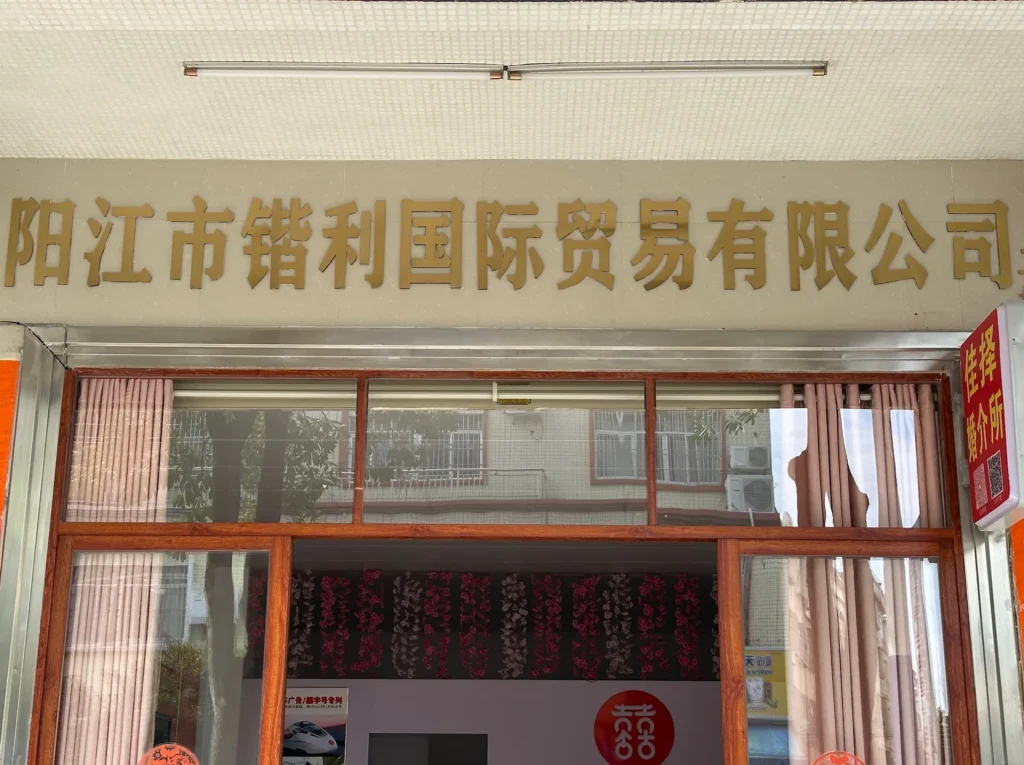
If you have been sourcing cutlery from China for any length of time, you have almost certainly worked with a middleman without even knowing it. Many suppliers market themselves as “manufacturers” online, but in reality they are trading companies, sourcing agents or resellers that own zero production equipment.
The problem is not just that middlemen add cost — although they typically add 15–30% on top of the factory price. The bigger risks are opaque quality control, disconnected communication, unstable lead times, and no accountability when things go wrong. For growing brands, relying on layered intermediaries is one of the biggest barriers to scaling profitably.
This guide breaks down exactly how to tell trading companies and real factories apart, explains the true cost of working through middlemen, and gives you actionable strategies to source directly from manufacturers and build more profitable, reliable supply chains.
The Layered Middleman Supply Chain
Very few “one-stop sourcing” providers are actual manufacturers. Most cutlery supply chains have multiple layers between you and the production floor, and each layer takes a cut.
Typical Intermediary Layers
In the worst-case scenario, your order may pass through three or more parties before reaching the factory:
- Front-end trading company: The company you actually communicate with, responsible for sales and customer service.
- Sourcing agent or broker: The party that finds a factory and negotiates pricing, taking a 5–10% commission.
- Secondary processing workshop: Small facilities that handle assembly or finishing for factories without full in-house capacity.
- Actual production factory: The facility that forges, grinds and heat-treats the blades.
Each layer adds cost, slows communication and dilutes quality control. A specification change that would take 24 hours to agree directly with a factory can take a week when passed through three intermediaries — and details often get lost in translation.
What Middlemen Cost You Beyond Price
The financial markup is only part of the problem. Working through intermediaries also creates:
- Longer lead times: Middlemen batch orders to fill container loads, so your order may wait until other customers’ orders are ready.
- Weaker quality accountability: When defects happen, each party blames the next, with no single party taking ownership.
- Limited customization: Middlemen often push standard designs that are easy to source, rather than supporting fully custom OEM projects.
- Intellectual property risk: Sharing designs with multiple intermediaries increases the risk of your product being copied or leaked.
Core Differences Between Trading Companies and Real Factories
| Dimension | Trading Company | Real Factory |
| Core business | Sales, sourcing and brokerage | Production, manufacturing and process engineering |
| Production ownership | No owned equipment; outsources all manufacturing | Owns and operates full production lines in-house |
| Technical expertise | Limited to product catalog specs; cannot answer deep process questions | In-house engineering, metallurgy and QC teams |
| Pricing structure | Built-in commission markup on top of factory price | Direct ex-work pricing based on actual production cost |
| MOQ flexibility | Often higher, because they must meet factory minimums | Can offer flexible MOQs for in-house production |
| Problem resolution | Slow, as issues must be relayed to the factory | Fast, with direct access to production and QC teams |
5 Reliable Ways to Verify a Real Factory
Anyone can put “manufacturer” in their company name and website. Use these five verification methods to confirm you are talking to the actual producer.
1. Ask for a Detailed Production Capability Presentation
Real factories can walk you through their full production flow: forging, heat treatment, grinding, handle assembly, polishing, QC and packaging. They can tell you exactly how many workers are in each department, what equipment they use, and what their daily output capacity is.
Trading companies will give vague answers and avoid specific production details. If a supplier cannot explain their own heat treatment process parameters, they do not run it themselves.
2. Request an Unplanned Live Video Tour
Pre-recorded factory videos and stock photos prove nothing. Ask for a live video call at short notice, and ask to see specific areas: the raw material warehouse, heat treatment workshop, grinding floor and finished goods warehouse.
Ask the person on camera to show you today’s production schedule, or hold up a piece of paper with your name on it next to the production line. If they make excuses, delay the call, or only show you a showroom, you are not talking to a factory.
3. Check Business Licenses and Export Qualifications↗
Ask for a copy of the company’s business license, and verify that the business scope includes “manufacturing” or “production,” not just “trading” or “import/export.”
Genuine manufacturers also hold their own direct export license and issue VAT invoices under their own company name. Trading companies may show you other factories’ certificates, but they cannot produce documentation issued to their own entity for production equipment.
4. Evaluate Their Response to Technical Questions
Ask specific technical questions a salesperson would not know off the top of their head:
- What tempering temperature do you use for 9Cr18MoV?
- What is your standard grinding tolerance for blade taper?
- How many hours does your standard cryogenic treatment cycle take?
A real factory can route these questions to their engineering team and get you an answer the same day. A trading company will have to ask the factory and may take days to reply — or give you a generic, incorrect answer.
5. Order a Sample and Inspect the Packaging
Factory samples will usually have internal work order numbers, batch codes and factory packaging. Trading company samples often have generic packaging, or arrive in packaging that shows a different company name.
Actionable Strategies to Bypass Middlemen
Once you know how to identify real factories, use these strategies to build direct partnerships and cut out intermediaries entirely.
Target Manufacturing Hubs Directly
Focus your sourcing on established manufacturing clusters, such as Yangjiang for cutlery. In concentrated industrial hubs, almost every supplier in the area is a real manufacturer, and you are far less likely to encounter trading companies posing as factories.
The local supply chain ecosystem also means faster lead times, lower costs and better component quality than working with isolated factories in other regions.

Start Small With Trial Orders
You do not need to commit to a full container on your first order. Place a small trial order of 100–500 pieces to evaluate communication speed, sample accuracy, build quality and packaging.
This low-risk test will quickly reveal whether you are working with a responsive, capable factory or a slow, disconnected middleman.
Build Long-Term Direct Partnerships
Factories reserve their best pricing, priority production slots and most flexible terms for direct, long-term customers. Once you have a track record of orders, you will receive better service than any middleman can pass through.
For growing brands, a direct factory partnership also unlocks custom development support, exclusive design options and full control over your product quality.
Conclusion
Working with a trading company may seem easier at first, but it costs you money, slows you down and weakens your quality control. For brands that want to scale profitably and build consistent product quality, sourcing directly from real manufacturers is always the better long-term strategy.
Based on our 15+ years as a Yangjiang-based cutlery manufacturer, the most successful buyers are the ones that invest time in verifying partners upfront, then build long-term, direct factory relationships. The effort you put into bypassing middlemen pays back in better pricing, faster lead times and far fewer supply chain headaches.
If you would like to schedule a live factory tour or discuss a direct factory partnership for your cutlery sourcing, our team is ready to walk you through every step of production.
Q: What is the difference between a trading company and a factory direct supplier?
A: A factory owns and operates its own production equipment and controls manufacturing directly. A trading company acts as a middleman, outsourcing production and adding a markup without owning factory capacity.
Q: How much markup do trading companies add to cutlery orders?
A: Most trading companies and sourcing agents add 15–30% markup on top of the actual factory ex-work price, with larger markups common for smaller orders.
Q: How can I tell if a knife supplier is a real factory or a trading company?
A: Verify by requesting live video factory tours, asking technical production questions, checking business licenses for manufacturing scope, and evaluating response speed to process questions.
Q: Is factory direct sourcing always cheaper than trading companies?
A: Yes, factory direct sourcing eliminates middleman markup, usually saving 15–30%. It also provides better quality control, faster communication and more customization flexibility.
Q: Why do so many trading companies pretend to be factories?
A: Buyers prefer working directly with manufacturers for better pricing and control. Trading companies pose as factories to win orders and justify their pricing.
Q: What are the risks of sourcing cutlery through a trading company?
A: Risks include higher costs, longer lead times, weaker quality accountability, limited customization, communication delays and increased intellectual property risk.
Q: Can a good trading company be worth the extra cost?
A: For very small, one-time orders with no long-term plans, a trading company may add convenience. For scaling brands, direct factory partnerships are always more cost-effective.
Q: What is the best way to find real cutlery manufacturers in China?
A: Focus on established manufacturing hubs like Yangjiang, verify with live factory tours, and start with small trial orders to test capability before committing to larger volumes.
4.2
- How to Source Kitchen Knives Directly from Factory Partners Without Hidden Fees | B2B Sourcing & Supply Chain Strategy
- The Ultimate Checklist for Verifying a Reliable Chinese Knife Manufacturer | B2B Sourcing & Supply Chain Strategy
- Why Family-Factory Equity Models Offer Better Pricing and Quality Control | B2B Sourcing & Supply Chain Strategy
- Red Flags to Watch Out for When Sourcing Knives from B2B Marketplaces | B2B Sourcing & Supply Chain Strategy
• 5. How to Build a Long-Term Partnership with a Cutlery Manufacturer | B2B Sourcing & Supply Chain Strategy