
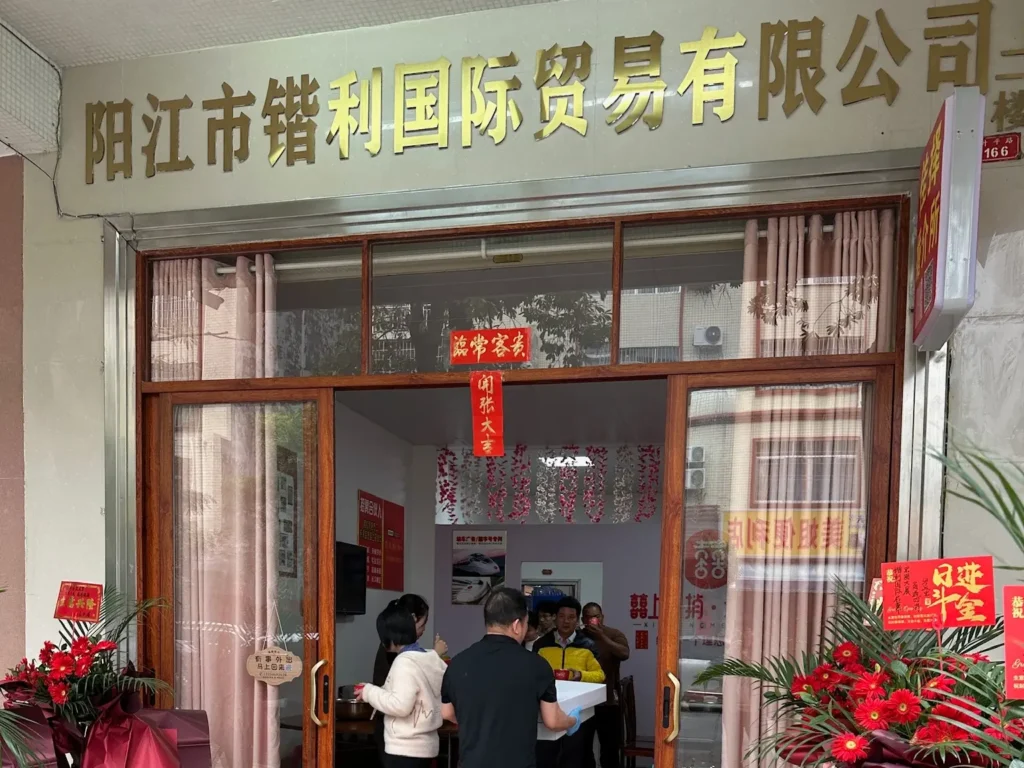
Walk into any kitchenware store in New York, Berlin, Sydney or São Paulo, and the odds are that most of the knives and scissors on the shelves were made in one relatively small coastal city in southern China: Yangjiang.
Today, Yangjiang produces over 70% of China’s total cutlery output and supplies more than half of the world’s kitchen knives, scissors and hardware tools. It is home to more than 8,500 cutlery-related enterprises, and its products export to over 130 countries and regions worldwide.
But this dominance is not a recent phenomenon built on cheap labor alone. It is the result of 1,400 years of craft heritage, a uniquely concentrated industrial ecosystem, and generations of accumulated metallurgy and manufacturing expertise. This guide breaks down exactly what makes Yangjiang the undisputed knife capital of the world, and why global brands continue to source their cutlery here.
1,400 Years of Forging Heritage↗
Yangjiang’s relationship with blade making dates back to the Sui and Tang Dynasties, over 1,400 years ago. Located in Guangdong Province with access to coastal trade routes and local mineral resources, the region developed a thriving blacksmith culture early on. Local craftsmen forged agricultural tools, knives and swords, developing techniques passed down through family lineages from master to apprentice.
By the late Qing Dynasty, Yangjiang knives were already famous across southern China for their sharpness, durability and consistent quality. Local masters perfected hand-forging, differential heat treatment and sharpening techniques that remain foundational to the city’s manufacturing culture today.
This generational expertise is one of Yangjiang’s most underrated competitive advantages. Unlike manufacturing hubs that appeared in just a few decades, Yangjiang has had centuries to refine its craft. Many of today’s factory owners, master technicians and heat treatment specialists come from multi-generational forging families, carrying knowledge that cannot be learned from textbooks or replicated quickly.
In the 1980s, as China opened up to global trade, Yangjiang’s traditional workshops evolved into modern factories, combining time-honored craftsmanship with automated production technology. This blend of tradition and innovation is what allows Yangjiang factories to produce both hand-finished premium knives and high-volume budget lines with equal proficiency.
The Industrial Cluster Advantage: The 30-Minute Supply Radius
The biggest reason for Yangjiang’s unbeatable efficiency and cost competitiveness is its highly concentrated industrial cluster. Within a 30-kilometer radius, you can find every single part of the cutlery supply chain: raw steel suppliers, forging workshops, dedicated heat treatment facilities, precision grinding shops, handle manufacturers, packaging suppliers and export logistics providers.
This 30-minute supply chain radius creates benefits that no other manufacturing location in the world can match:
Shorter Lead Times
Because every production step happens locally, there is no cross-city shipping of semi-finished products. A blade can go from raw steel bar to finished, packaged knife without ever leaving the Yangjiang area. This cuts production timelines by 20–30% compared to factories in other regions that rely on outsourced components.
Lower Production Costs
Intense local competition drives efficiency and keeps pricing for materials, components and processing services competitive. Factories do not need to build every process in-house — they can work with specialized local partners, reducing overhead and passing savings on to buyers.
Better Quality Control
When every supplier is within a short drive, factories can easily visit partner workshops, inspect processes in person, and resolve quality issues immediately. This is much harder when components are shipped from hundreds of kilometers away, with days of transit between steps.
Faster Customization and Sampling
For OEM and custom projects, local component suppliers mean faster prototyping. Experienced Yangjiang factories can turn a design sketch into a finished sample in as little as 7 days, thanks to immediate access to every part of the production ecosystem.
Manufacturing Capability: From Entry-Level to Premium
A common misconception is that Yangjiang only produces low-cost, entry-level cutlery. In reality, the city’s manufacturing ecosystem covers every price tier and product category.
Leading Yangjiang factories invest heavily in advanced equipment: CNC grinding machines, automated heat treatment lines, laser cutting machines, PVD coating equipment and precision testing labs. Many have in-house metallurgy teams that develop custom steel formulations and optimize heat treatment processes for specific product lines.
The city is also home to the Yangjiang Hardware & Cutlery Industry Association, which sets industry quality standards, provides technical training, and certifies member factories. This industry self-regulation helps maintain overall manufacturing quality and ensures reputable factories meet international export standards.
Today, Yangjiang produces everything from basic promotional scissors to hand-forged Damascus premium chef’s knives, industrial shears, outdoor survival knives and professional hairdressing scissors. No other single location can match that breadth of capability.
Why Global Brands Keep Sourcing From Yangjiang
After decades of growth, Yangjiang has built capabilities that are extremely difficult to replicate anywhere else in the world:
- Unmatched scale: No other single city can produce the volume and variety of cutlery that Yangjiang can, from tiny pocket knives to heavy-duty industrial shears.
- Supply chain maturity: The depth of local suppliers means factories can handle almost any custom request, no matter how specific.
- Skilled workforce: Generations of expertise have created a deep pool of skilled workers, technicians and engineers specialized in cutlery production.
- Export experience: After decades of supplying global brands, Yangjiang factories understand international standards, certification requirements and market expectations.
- Continuous innovation: Factories here constantly adopt new technology, materials and processes to stay competitive in the global market.
Conclusion
Yangjiang’s position as the world’s knife capital is built on a rare combination of 1,400 years of craft heritage, a hyper-concentrated industrial ecosystem, and decades of global export experience. For buyers, sourcing from Yangjiang means access to unmatched production efficiency, competitive pricing, and deep manufacturing expertise — all backed by a supply chain that has been refined over centuries.
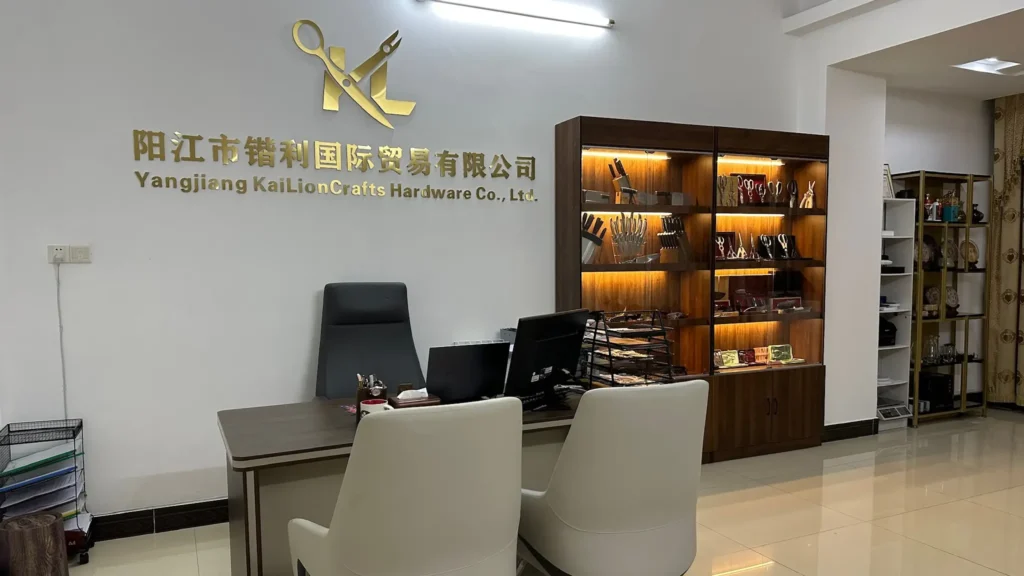
As a Yangjiang-based factory partner with deep roots in the local industry, we leverage this full ecosystem to deliver consistent quality, fast lead times, and transparent pricing to buyers worldwide. If you are looking to source cutlery from the world’s most experienced manufacturing hub, our team is ready to show you exactly what Yangjiang can do for your brand.
Q: What percentage of the world’s cutlery is made in Yangjiang?
A: Yangjiang produces over 70% of China’s total cutlery output and supplies more than half of the world’s kitchen knives, scissors and hardware tools, with products exported to 130+ countries.
Q: Why is Yangjiang famous for making knives and scissors?
A: Yangjiang has 1,400 years of blade forging history, a highly concentrated industrial cluster, and a skilled generational workforce, creating unmatched efficiency, quality and cost competitiveness.
Q: How many cutlery enterprises are there in Yangjiang?
A: Yangjiang is home to more than 8,500 cutlery-related enterprises, covering every part of the supply chain from raw material processing to finished product export.
Q: Is Yangjiang cutlery good quality?
A: Yangjiang produces cutlery across every quality tier, from entry-level to premium hand-forged Damascus. Top factories meet international standards including FDA, LFGB and CE.
Q: How long does standard cutlery production take in Yangjiang?
A: Standard ODM orders typically take 30–45 days, while custom OEM orders take 60–90 days. The local supply chain enables faster lead times than other manufacturing regions.
Q: What does the Yangjiang Hardware & Cutlery Industry Association do?
A: It is the official industry body that sets quality standards, provides technical training, and certifies member factories, helping maintain consistent manufacturing quality across the region.
Q: What cutlery products are manufactured in Yangjiang?
A: Yangjiang produces kitchen knives, kitchen shears, hairdressing scissors, industrial shears, outdoor knives, BBQ tools and full ranges of hardware cutlery products.
Q: Why do global brands source cutlery from Yangjiang?